Borders & Edging
The Detail That Defines a Landscape

The Detail That Defines a Landscape
Edging is the difference between a property that looks maintained and one that looks intentional. It's the cheapest upgrade on any property.
It's a small detail, and most homeowners don't notice it consciously — they just notice that some yards look polished and others don't. Almost always, the edges are why.
A clean edge is what separates a lawn from a planting bed. It's what keeps mulch from migrating into the grass and grass from creeping into the bed. It's what makes a driveway or walkway look like part of the design instead of a strip of concrete the lawn happens to grow next to.
Cutting Edge has been installing and maintaining edges across DuPage County for over 20 years. We're family-owned and based in Villa Park. Whether you need crisp lines maintained on an existing property or a full set of borders installed as part of a new design, we handle it the way it should be handled — with the right tools, the right depth, and the right attention to what your landscape will look like a year from now.
Edging falls into two categories: the edges you maintain on a property that already has them, and the borders you install to define a landscape from scratch. We do both, and the work is different enough that it's worth understanding what you actually need.
This is the maintenance work — keeping the separation crisp between your lawn and the paved surfaces around it. Done with a powered edging machine that cuts a vertical line where grass meets concrete or asphalt, removing the creeping growth that fills in gradually across the season.
A property that gets edged regularly looks intentional. A property that doesn't gets a creeping fringe of grass spilling onto the walkway, blurring the line between hardscape and lawn. The work itself takes minutes per visit; the difference it makes is visible from the street.
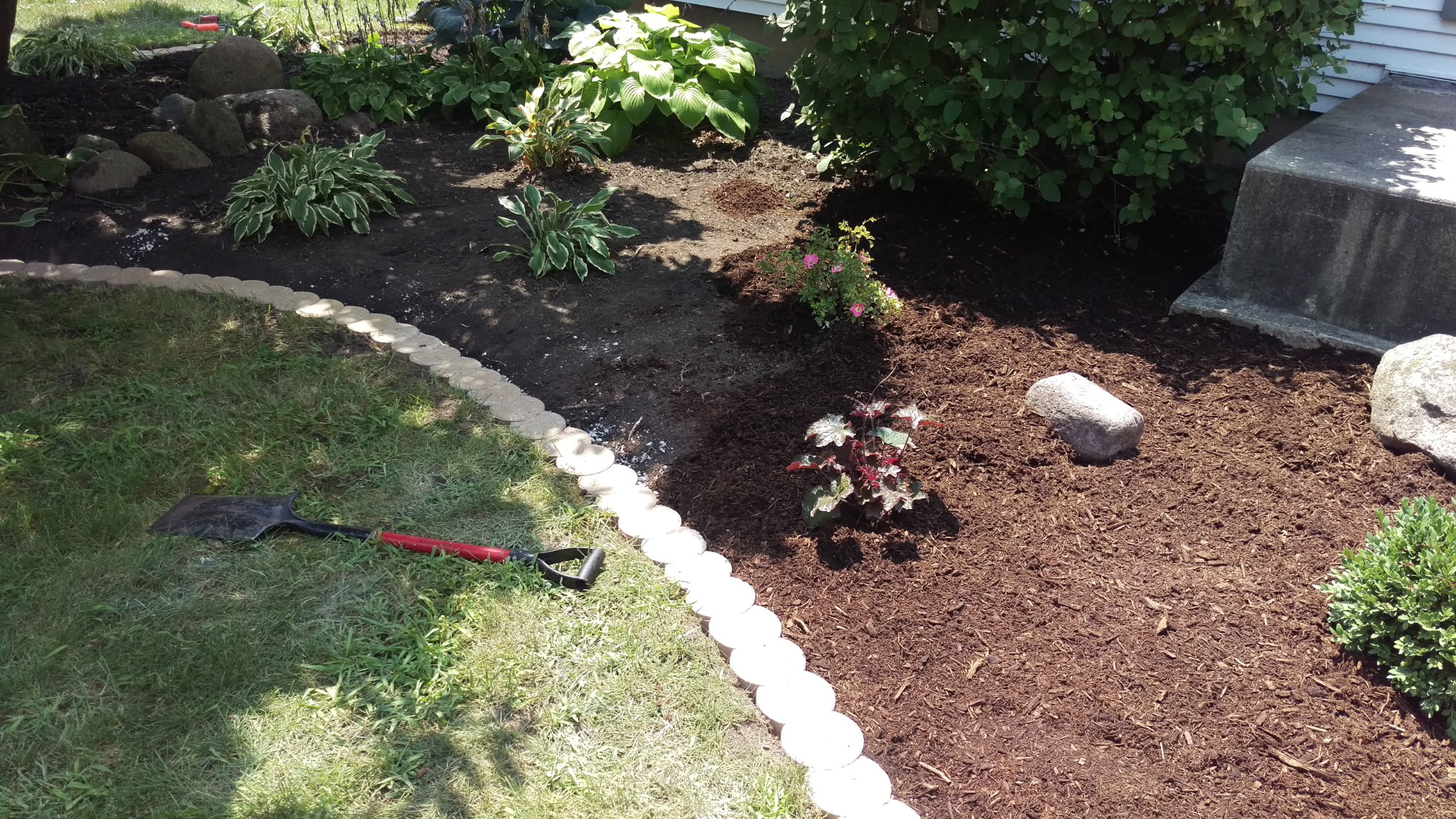
The most common edging treatment for planting beds. A clean, V-cut trench separates the bed from the surrounding lawn, holding mulch in place and stopping grass from invading the bed. Bed edging machines exist, but most of the time we install cultivated edges by hand with a spade — the hand-cut edge has a cleaner profile and follows the natural curves of the bed better than a machine can.
Cultivated edges need to be re-cut once or twice a year to stay crisp. We can handle that as part of regular maintenance, or as a standalone spring service.
For a more permanent, defined look, we install borders made from physical materials. Each has a different aesthetic and a different price point.
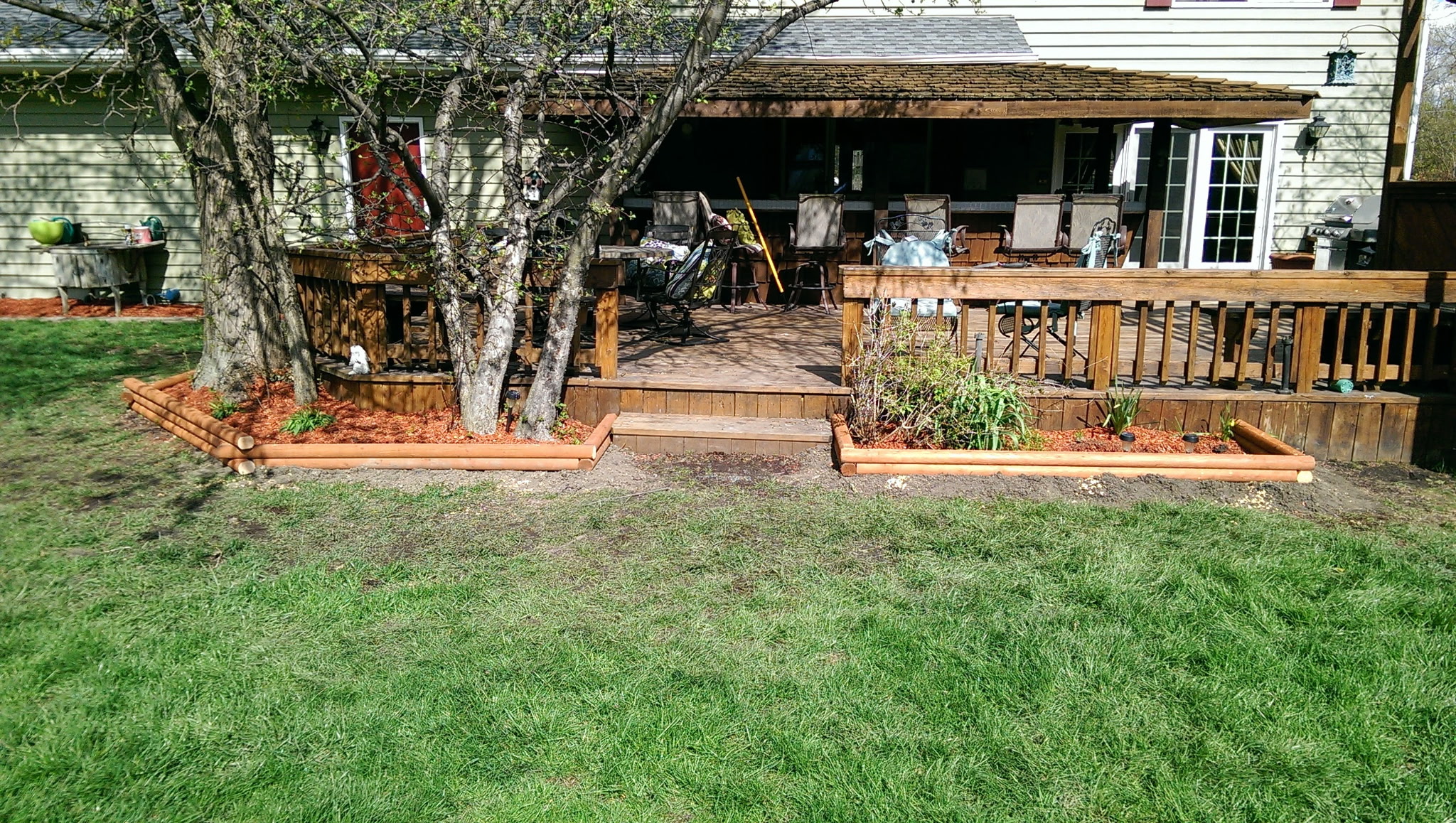
Timber edging is the most affordable and the most casual — works well in informal landscapes, naturalistic plantings, or vegetable gardens. Cedar holds up best.
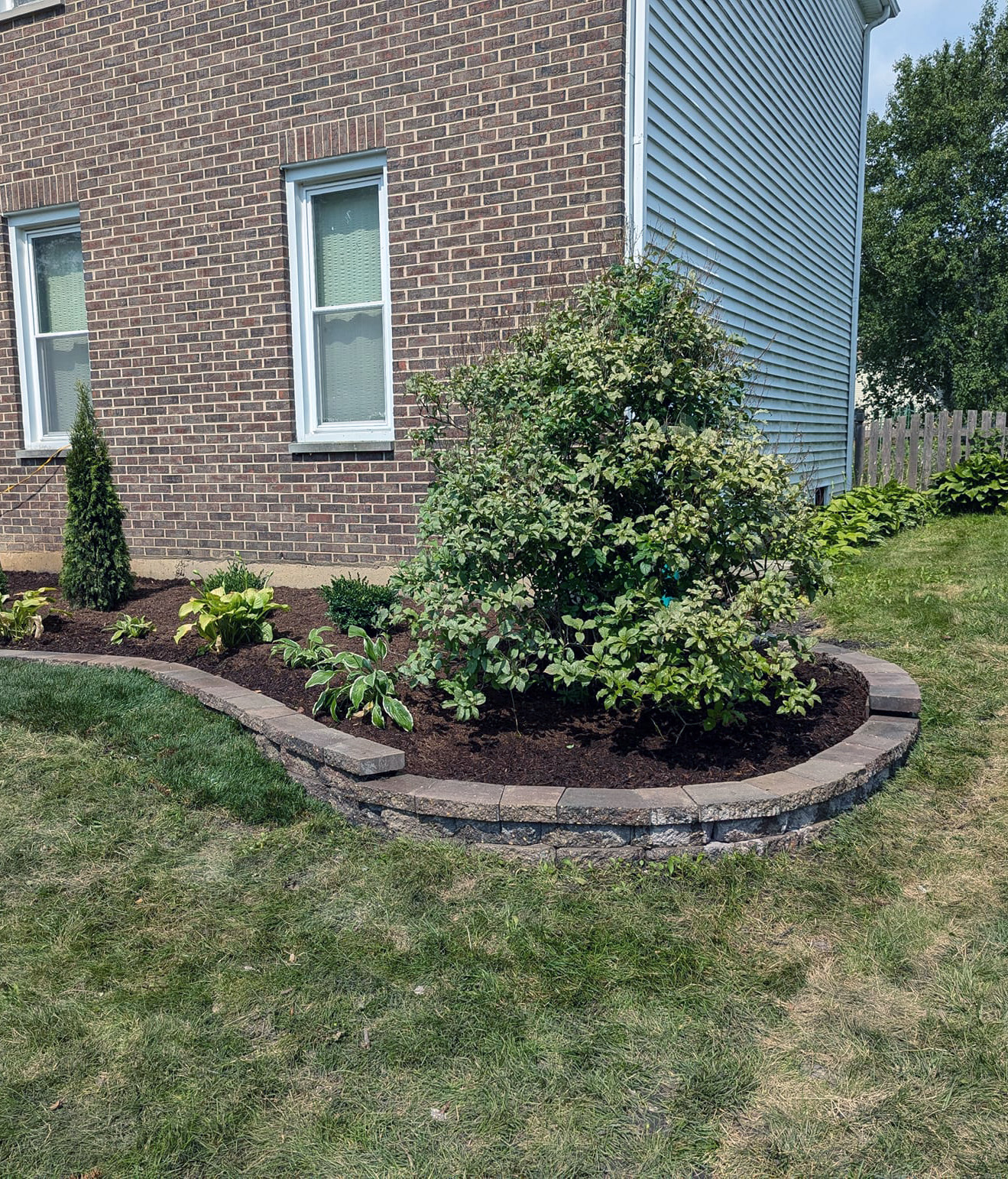
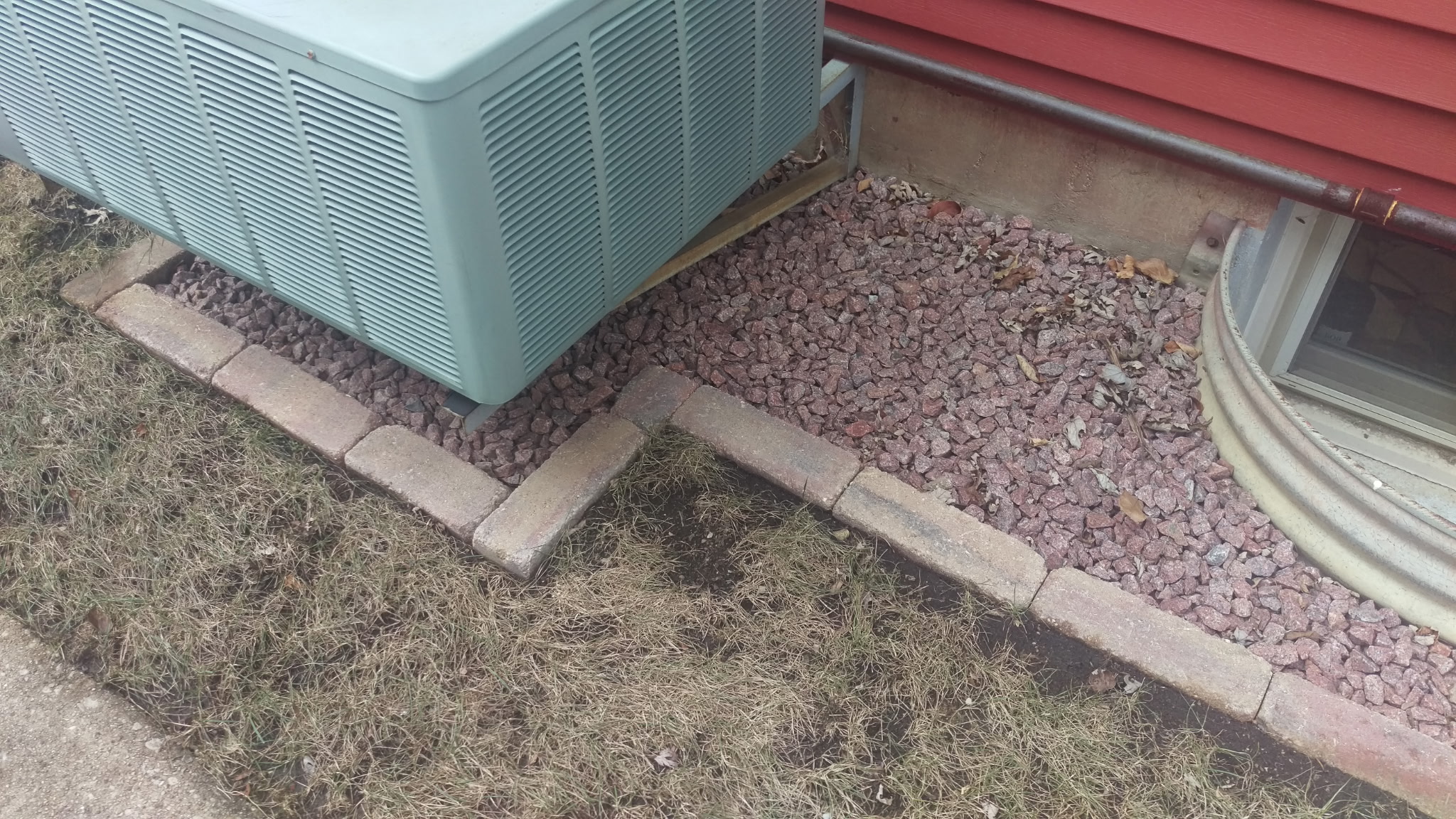
Masonry block offers a clean, structured look that pairs well with brick or stone hardscape. Easy to install in straight runs or gentle curves, durable, and available in a range of colors.
Metal edging — usually steel or aluminum — gives the cleanest, most modern profile. Almost invisible from a distance but holds a sharp line indefinitely. Best for contemporary designs and properties where the bed shape itself is the visual statement.
Natural stone is the highest-end option. Cut stone or fieldstone borders feel established and substantial — the right choice for traditional landscapes and properties where you want the borders themselves to be a design feature, not just a transition.
We help you choose what fits your property, your design, and your budget. Sometimes the answer is a hand-cut cultivated edge. Sometimes it's natural stone. Most projects use a mix.
For properties where the existing edges have softened, gone shallow, or disappeared entirely, we restore them. Cultivated edges get re-cut and reshaped. Material borders that have heaved, settled, or come loose get reset. The work is mostly invisible after it's done — which is exactly the point.
Most landscape companies will install an edge for you. Plenty of them will install it well enough that it looks great for two months. Almost none of them install it deep enough, or with the right material choice for your specific bed, that it still looks intentional in October.
The reason comes down to depth and prep. A cultivated edge cut shallow grows over by midsummer. Material borders set on top of soil instead of properly bedded shift, heave, and lean within a year. Steel edging buried half an inch deeper than it should be does its job for a decade; the same edging done quick and shallow needs replacing in three seasons.
We cut deep, we set borders properly, and we choose materials that match the long-term look you want — not just the day-of bid. The result is edges and borders that hold their line through the season and through the years. The work shows up most where you don't notice it: in the absence of the soft, fuzzy, neglected look that creeps onto every poorly maintained property.
It's a small detail. It's also the detail that makes the difference.