Mulch & Topsoil
Delivered, Installed, Done Right

Delivered, Installed, Done Right
Mulch and topsoil are the materials most homeowners underestimate. Spread right, they do more for a bed than anything you can plant in it.
They look like the finishing touches — the stuff you spread once you're done with the real landscaping work. They're not. They're what determine whether the real landscaping work actually succeeds.
Topsoil is what your plants grow in. Bad soil produces struggling plants no matter how good the design or how expensive the trees. Mulch is what protects what's already growing — suppressing weeds, holding moisture, moderating temperature swings, and breaking down to feed the soil over time. Get these two materials right and the rest of your landscape gets easier. Get them wrong and you're working uphill against the property forever.
Cutting Edge has been delivering and installing mulch and topsoil across DuPage County for over 20 years. We're family-owned and based in Villa Park. Bulk delivery, professional installation, or both — we make sure the materials are the right type for your application, applied correctly, and finishing the property the way it should.


Whether you need bulk material dropped at your driveway for a weekend project or a full installation across every bed on the property, we handle the work. Most customers go with full installation — the price difference is small once you factor in time, wheelbarrows, and the fact that we'll do it in a day instead of a weekend.
The most common choice and the workhorse of residential mulching. Double-ground and triple-ground hardwood — the numbers refer to how many times the material has been processed — give you a medium-textured, brown mulch that performs well, breaks down at a reasonable rate, and looks clean for the full season.
The right choice for most beds, most properties, most budgets.
Made from the bark itself rather than the wood underneath. Darker, finer-textured, and a more polished look — closer to what you see in professionally maintained showpiece landscapes. Costs more than standard hardwood and is worth it for front-yard beds, foundation plantings, or anywhere visual impact matters most.
Colored mulch is the same hardwood material with iron oxide-based pigments added. Available in rustic red, chocolate, auburn, black, and gold. The color holds through most of the season and can add real contrast and definition to a landscape — black mulch in particular makes plants pop in a way natural brown never quite does.
A note on safety: the dyes currently used by reputable mulch producers are non-toxic and pose no risk to people, pets, or plants. The pigments are similar to those used in cosmetics. The risk with cheap bagged mulch isn't the dye — it's that low-end manufacturers sometimes shred construction debris (potentially with lead paint, treated wood, or other contaminants) into the product. We source bulk from reputable Illinois suppliers, not gas-station pallets.
Cedar is one of the more expensive options and earns the price for the right property. It decomposes slowly — measured in years rather than seasons — so beds mulched with cedar don't need refreshing as often. The natural resins give it a pleasant scent and provide some insect-repelling properties (the same reason cedar gets used for closet lining and dresser drawers). Best for properties where you want a longer-lasting mulch and don't mind paying upfront for the longevity.
We carry cypress when customers ask for it, but we'll be honest about what's changed with this product. Cypress mulch was historically prized for its rot-resistance and natural pest deterrence — qualities that came from being processed from mature, century-old cypress trees in southern lowlands.
That's no longer the case. Demand has driven over-harvesting of cypress, and most cypress mulch sold today comes from immature trees that haven't developed those protective properties. The light blond color is still attractive and gives a real contrast in a landscape, but the functional benefits are largely gone. If you want cypress for the look, that's fine. If you're choosing it for the rot resistance you read about online, cedar is the better choice for the same money.
Topsoil is where most landscape projects either succeed or struggle. We deliver and install screened topsoil — meaning the material has been processed to remove rocks, roots, debris, and clumps, leaving a clean, workable soil that mixes evenly and grades smooth. The difference between screened and unscreened soil shows up the first time you try to plant or seed into it.
Common applications: filling low spots in lawns, leveling areas before sod or seed installation, building up beds that have settled or eroded, amending poor existing soil before planting, and grading correction projects. We help you figure out volume — most customers either underestimate by half or overestimate dramatically, and neither is fun to deal with after the truck has left.
Pure topsoil is the right answer for grading and structural fill. For planting beds and vegetable gardens, a topsoil-compost blend performs better — the organic matter improves soil structure, holds moisture, and feeds plants as it breaks down. We carry blends suited to different applications and can recommend the right one for what you're doing.
Most beds need mulch refreshed every one to two years. Hardwood mulches break down and lose their color; dyed mulches fade; volume drops as the material composts into the soil. Topsoil settles too, especially in newly graded areas — usually noticeable in the second season as low spots start to reappear. We handle annual refresh of either material as part of regular maintenance or as a standalone spring service.
Most homeowners and a lot of landscape services treat mulch and topsoil as finished products — buy them, dump them, spread them, done. The result is the most common landscape mistake we see across DuPage County: mulch piled too deep, especially against tree trunks and shrub stems.
The "mulch volcano" — that cone of mulch six inches deep piled up against the trunk of a tree — is a slow killer. It traps moisture against the bark, invites disease, and provides cover for rodents that chew the bark in winter. Trees that get this treatment for years often die a decade later from causes that trace back to the mulch. The same problem on a smaller scale kills shrubs faster.
Topsoil applications fail in different ways. Soil dumped over existing turf without removing the grass first creates a buried layer that decomposes and settles unevenly, leaving low spots within a year. Topsoil graded too thin doesn't actually fix the underlying problem; topsoil graded too thick smothers tree roots that may already be marginal.
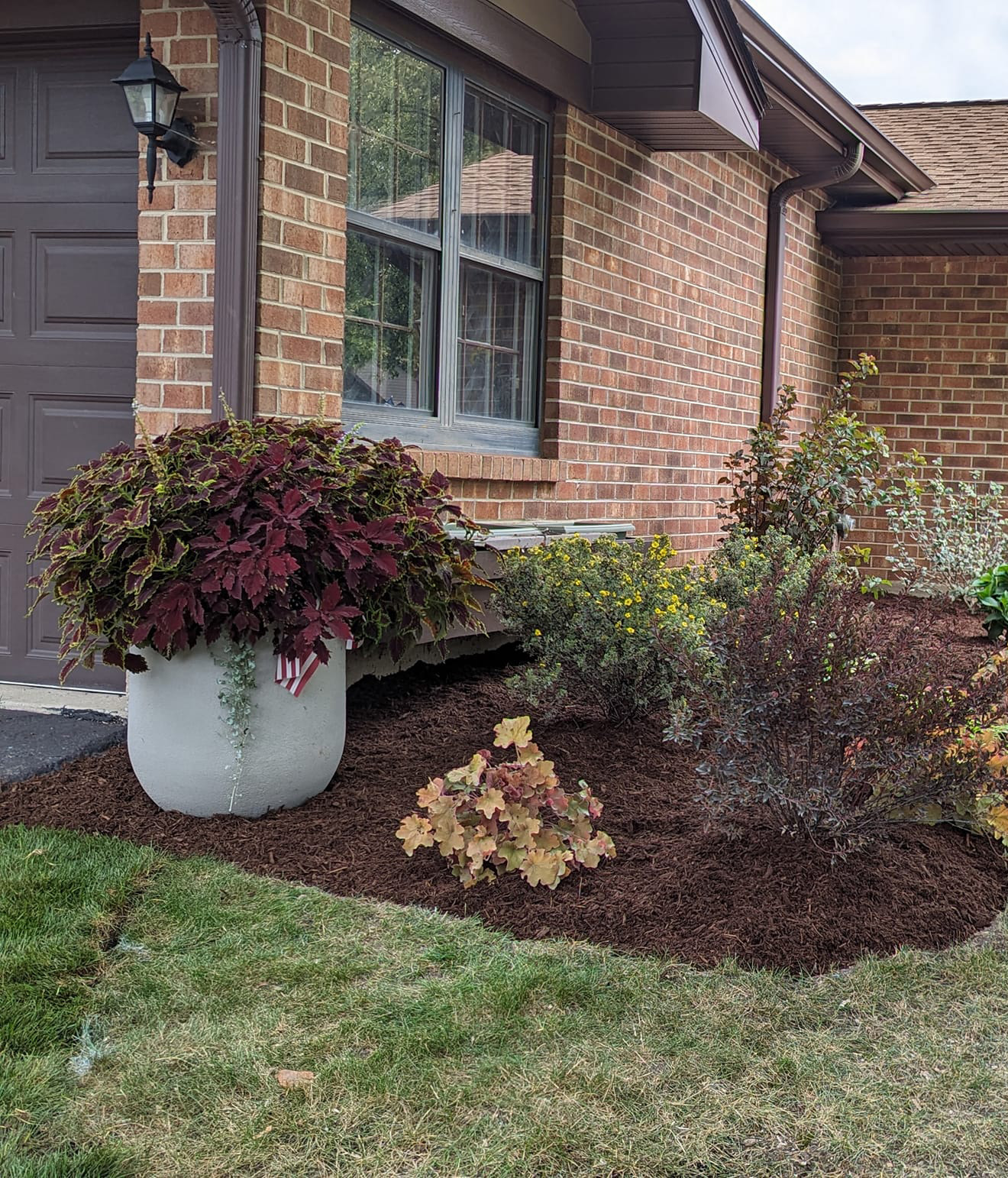
Mulch should be applied two to three inches deep across the bed, pulled back from the trunk or stem of every plant, and spread evenly to a clean edge. Topsoil should be applied at the right depth for the application — usually two to four inches for grading correction, more for major leveling — and properly tilled into existing soil rather than just piled on top.
We do this work the way it should be done. Right depth, proper clearance, clean edges, no shortcuts. Three generations of land care experience shows up in details like this — the kind of work that protects the trees and shrubs you've already invested in, not just the bed they're sitting in.