Drainage Solutions
Move Water Away From Where It Hurts

Move Water Away From Where It Hurts
Most landscape problems are actually water problems. The dead spot that won't recover, the soggy bed, the mulch that washes out every storm.
The bed that stays soggy a week after every rain. The foundation that's always damp. The wood mulch that washes onto the driveway every time a storm hits. They look like landscaping issues, but the cause is upstream — water going where it shouldn't, sitting where it can't drain, or pooling against the part of your property that's least equipped to handle it.
Drainage work isn't glamorous. It's mostly invisible once it's done — buried pipe, hidden gravel, a discharge point you'd never notice. But it's some of the highest-leverage work you can do on a property. A $2,000 drainage project can save a $15,000 foundation repair, and the dead corner of the yard that's been bothering you for three summers becomes usable again.
Cutting Edge has been solving drainage problems across DuPage County for over 20 years. We're family-owned and based in Villa Park, working with both residential homeowners and small commercial properties. We diagnose the actual problem first — most of the time it's simpler than people think — and install solutions that work with your property rather than fight it.

Drainage work starts with figuring out what's actually wrong. Standing water in one corner has different causes than soggy beds along the foundation, and the right solution depends entirely on the cause. We walk the property during or after a rain when possible, identify where the water is coming from and where it needs to go, and recommend the smallest fix that solves the problem.
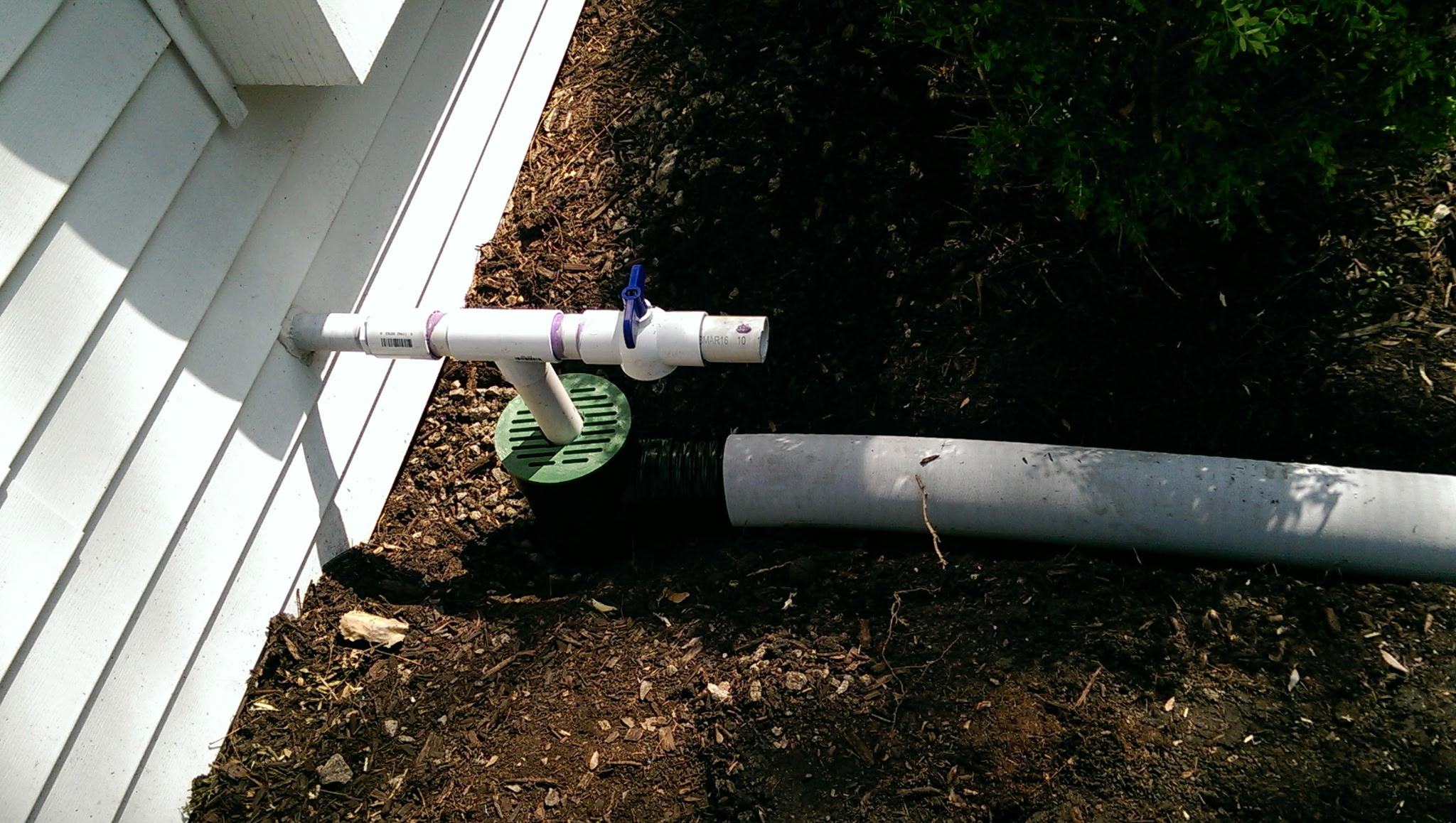
Most foundation drainage problems start at the gutters. Downspouts that dump water two feet from the house are the single most common cause of basement seepage, foundation damage, and the perpetually soggy beds along the perimeter of the property. Extending those downspouts six to ten feet out — or further, depending on grading — moves the discharge point past the foundation and out to where the soil can actually absorb it.
We install both above-ground extensions (flexible or rigid, removable for mowing) and buried extensions that come up at a discharge point in the lawn or beds. Buried extensions look cleaner and stay out of the way; above-ground extensions are easier to inspect and clear if they ever clog. We'll talk through which makes sense for your property.
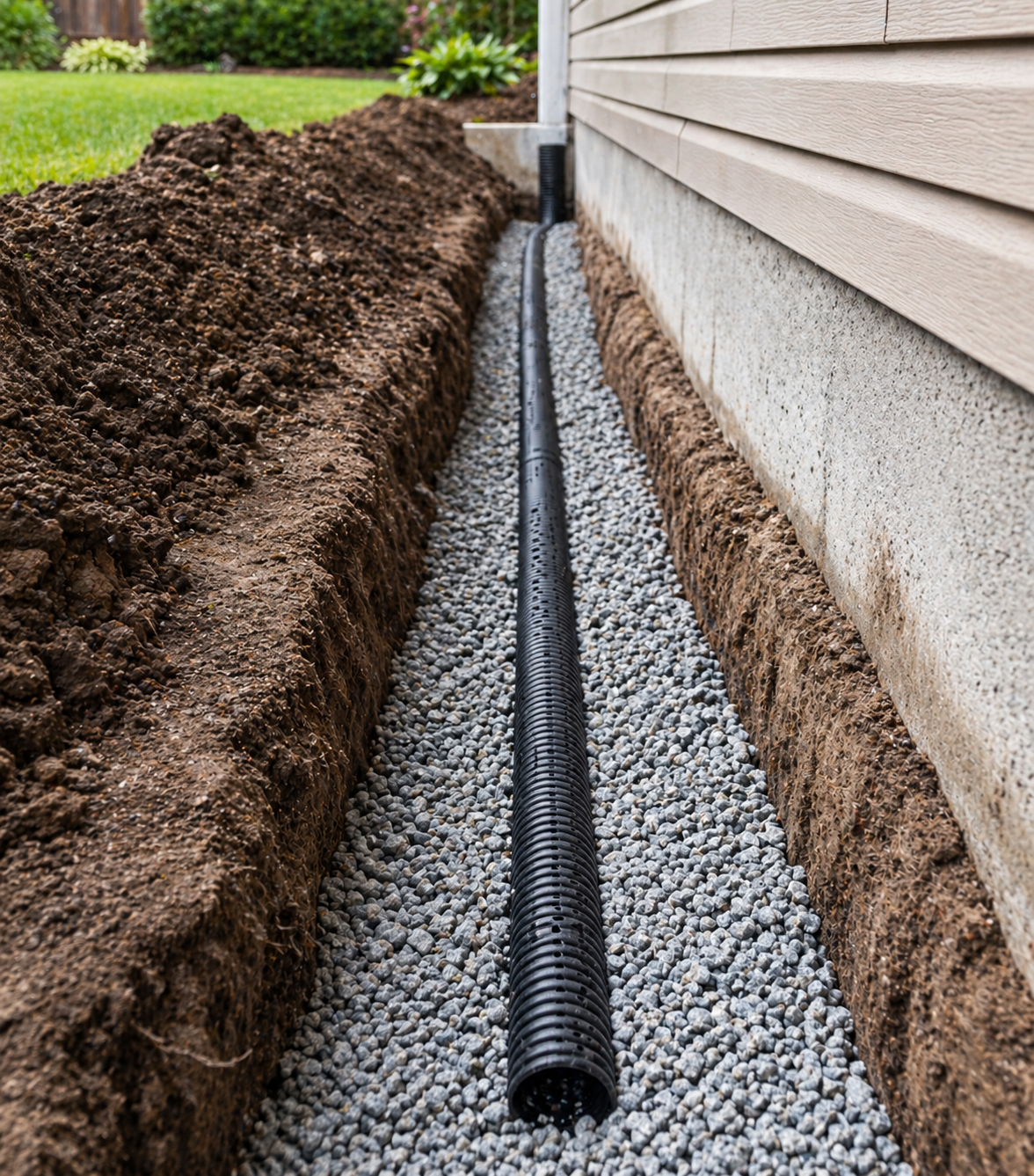
A French drain is a buried perforated pipe surrounded by gravel that collects water from a wet area and carries it somewhere it can drain or daylight out. It's the right solution for a lot of common DuPage County drainage problems: yards that stay soggy in low spots, beds that won't drain after rain, water moving toward a foundation that needs to be redirected away.
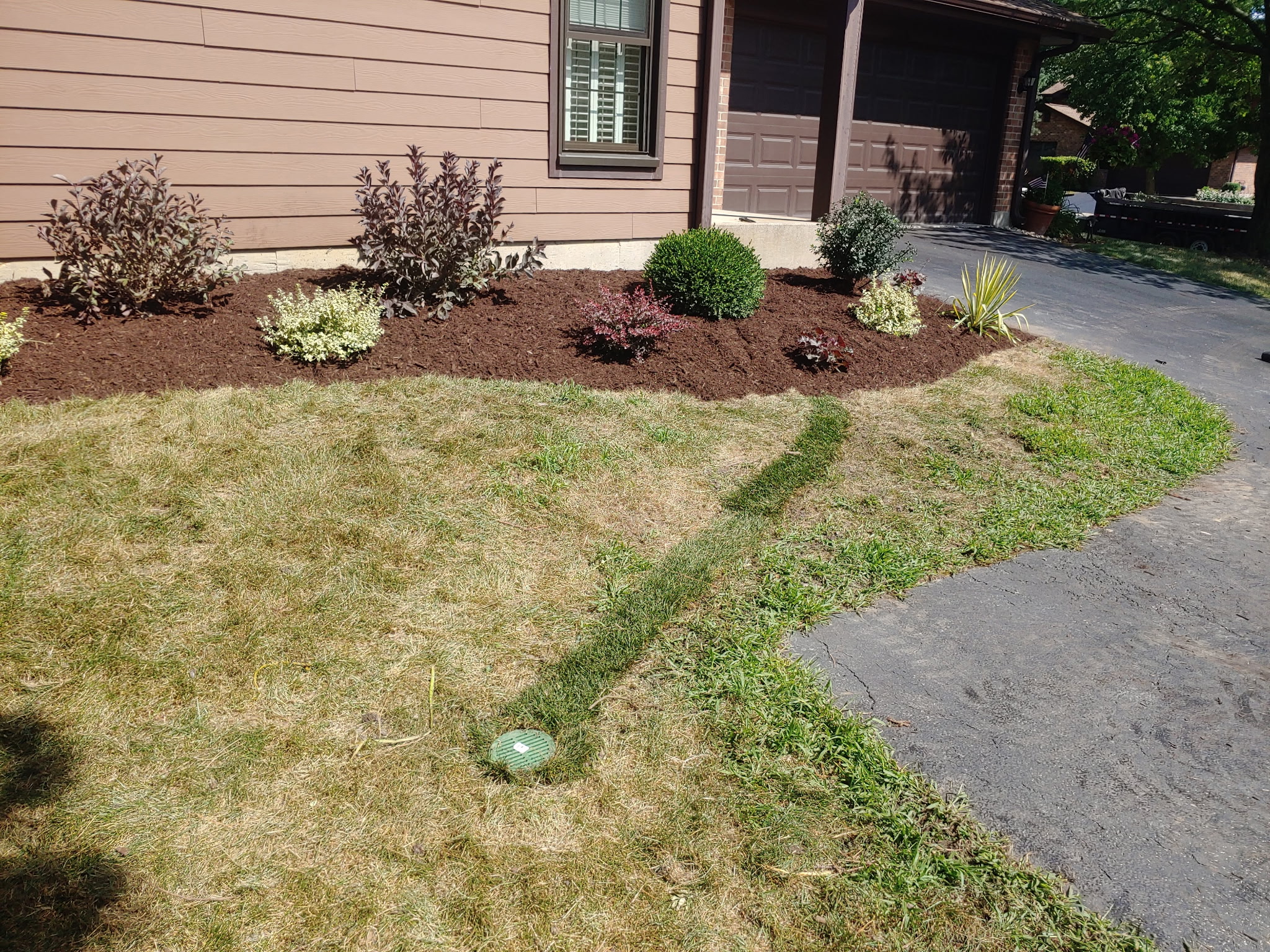
The work involves trenching to the right depth (usually 18 to 24 inches), grading the trench bottom for proper flow, laying perforated pipe in a sleeve of gravel and landscape fabric, backfilling, and restoring the surface. Done right, the French drain is invisible after the lawn grows back in — but the wet spot that's been bothering you since you bought the house is permanently gone.
When the discharge from a French drain or downspout extension can't daylight at the surface — because there's nowhere for the water to go without crossing onto a neighbor's property, or the lot is too flat for surface drainage — we install dry wells. A dry well is a buried gravel pit (or pre-fabricated chamber) that collects water and lets it slowly percolate into the surrounding soil rather than running off.
Dry wells are particularly useful for properties on flat lots, properties where local code restricts surface discharge near property lines, and high-volume gutter discharge where the water needs somewhere to go that isn't the lawn.
Sometimes the right answer isn't a buried pipe — it's regrading the surface so water moves the right way on its own. Yards that slope toward the house, low spots that hold water in the middle of the lawn, and patios that pitch the wrong way can often be fixed with minor regrading and topsoil work. Cheaper than a French drain and longer-lasting when grading is the actual problem.
We assess whether grading alone will solve your issue, or whether grading combined with subsurface drainage is the better answer.
For slopes where water keeps washing out beds, eroding mulch, or stripping topsoil, we install erosion control measures: dry creek beds (functional drainage that looks like landscape design), rock channels, retaining walls where the slope demands it, and ground-cover plantings that hold soil in place over time.
Most drainage problems can be solved cheaper than people expect. Many can be solved without any digging at all — sometimes a properly extended downspout fixes the issue you were quoted $5,000 to address with a French drain.
That's why every drainage project we do starts with a free on-site assessment. We walk the property, look at where the water's coming from, where it's going, and where it should go. Sometimes the answer is simple — extend three downspouts, regrade one corner, done. Sometimes the answer is more involved — French drain along one side of the property, dry well in the corner, redirect the sump discharge. Either way, we'll tell you what we actually see and what it'll actually take, not the most expensive option that fits the symptom.
We've done a lot of follow-up work on drainage projects installed by other contractors who skipped the diagnosis. The pattern is consistent: someone got sold a French drain that didn't address the actual water source, and the problem came back within a season. The fix is almost always to add the work that should have been done in the first place — usually gutter extensions and grading — at a customer who's now paid twice.
You don't need the biggest solution. You need the right one. We're a phone call away to figure out which is which.