Landscape Restoration
We Put It Back the Way They Found It


We Put It Back the Way They Found It
Most contractors will tear up your yard to do their job. Almost none of them will put it back together.
You hired someone to build an addition, take down a tree, or run a new drain line across the front yard. They did the job they came to do — and then they left, and now your yard looks like the job site it was. Tire ruts across the grass. A trench backfilled with rock and subsoil. A bare circle where the tree used to stand. A pile of dirt that doesn't match anything around it.
That's because the people who tore it up almost certainly weren't landscapers. Putting the property back together isn't their trade, and most of the time it was never in their contract. So you get a finished project and a wrecked yard, and the wrecked yard is now your problem.
That's the problem we solve. Cutting Edge has been restoring lawns and landscapes across DuPage County for over 20 years — family-owned, based in Villa Park, and well used to walking onto a property after the heavy equipment is gone and figuring out exactly what it takes to make it look like nothing ever happened there.


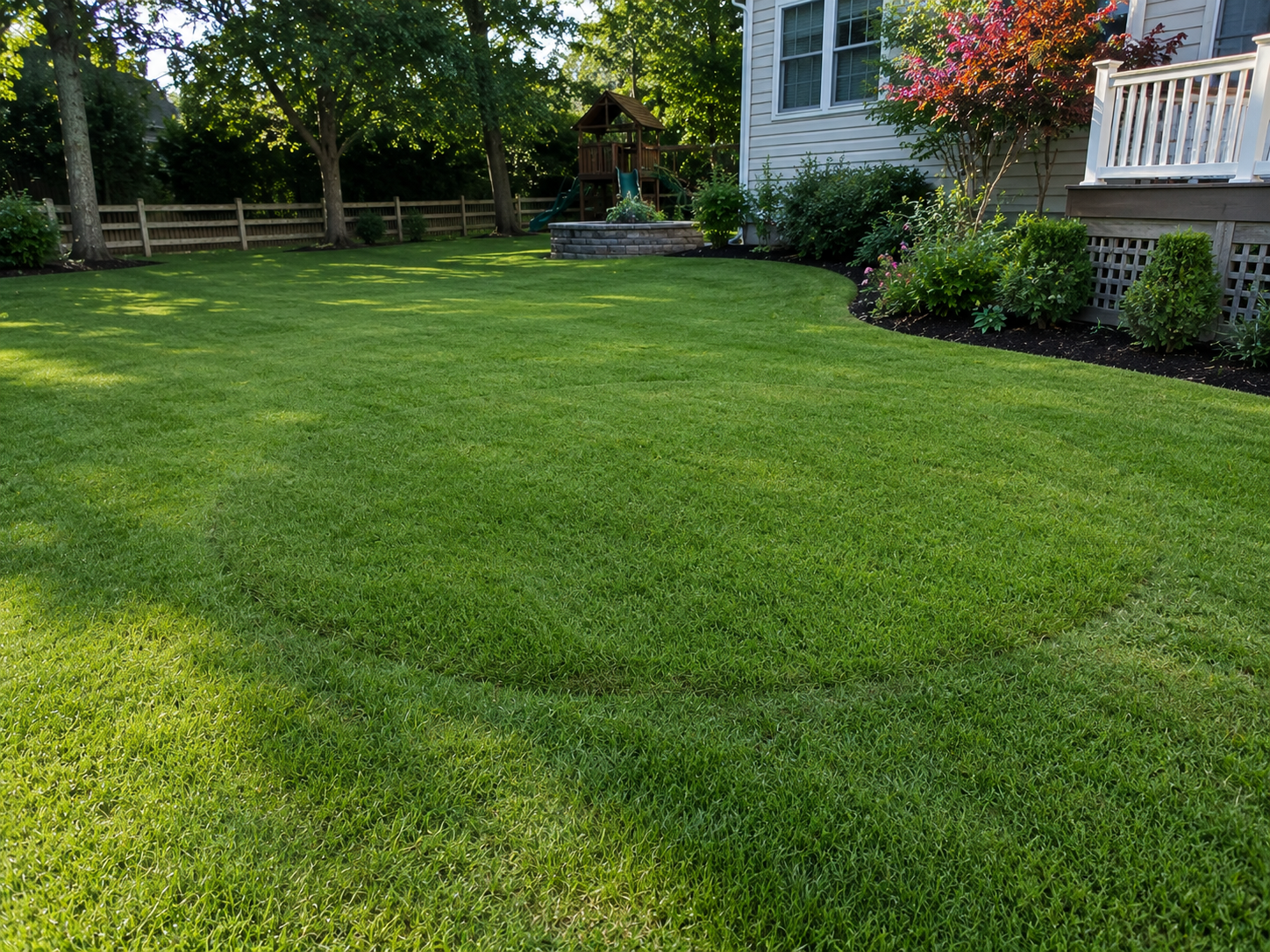
Heavy equipment compacts the soil, mixes dead subsoil up into the surface, and leaves ruts and bare ground behind. We start by reading what's actually wrong below grade, not just on top — because grass laid over compacted, displaced soil looks fine for a few weeks and then dies, and most homeowners blame the seed when the real problem was never fixed. We loosen and correct the soil, regrade to proper slope, bring in good topsoil, and re-establish the lawn with seed or sod.
A removed tree leaves a hole, a pile of ground-up stump shavings, and a circle of bare, sour soil where nothing's grown in years. We clear and haul the debris, backfill and amend the soil properly, regrade the spot flush with the rest of the yard, and get turf growing again — so it blends in by next season instead of staying a bald patch for the next five.
A drain pipe, water line, or utility trench across the yard leaves a long backfilled scar that settles unevenly over the following year if nobody grades it right. We level the trench line, replace the topsoil the digging buried or carried off, and re-establish the lawn so the line disappears — and so you're not left with a sunken channel that shows up every time it rains.
Strip away the specifics and most restoration jobs come down to the same handful of moves in different combinations: haul off the debris and leftover material, correct the grade so water runs where it should, lay down good topsoil, and get grass growing. We finish the property — clean edges, even surface, nothing left in a pile — so it's done, not just patched over.
Here's the thing nobody tells you when the dig is finished: the most common restoration failure isn't bad seed or bad sod. It's good seed or sod laid straight over soil that equipment compacted or that got buried under subsoil during the work. It greens up, looks great for a few weeks, then thins out and dies in patches — and you're left wondering what you did wrong.
You didn't do anything wrong. The soil was never fixed. We start with the soil every single time — breaking up compaction, correcting the grade, replacing the topsoil that got displaced — before a single piece of sod or handful of seed goes down. That's the entire difference between a yard that's actually restored and one that just looks restored until the first dry spell.
Three generations of property-care experience shows up most on jobs like these, where the real work is the part you can't see once the grass comes in. Anyone can throw seed on a scar. Making it grow — and stay — is the trade.